About Better Healthcare for Africa

March 31st, 2012

Our Mission

Better Healthcare for Africa (BHA) is a secular, non-political, charitable organization dedicated to improving health outcomes in southern Africa by supporting health facilities and educational efforts that empower patients, caregivers and healthcare providers.

Our Vision

To alleviate suffering due to disease or injury by providing equipment, supplies and educational resources to medically underserved communities in southern Africa.

Our Objectives

  • To obtain and deliver equipment and supplies for St. Albert’s Mission Hospital and other healthcare facilities in Zimbabwe and southern Africa.
  • To support educational initiatives for healthcare providers and communities.
  • To increase awareness in the United States of healthcare needs in southern Africa.
  • To partner with other organizations to maximize the aid we can provide.
  • To raise funds to support these efforts.

Better Healthcare for Africa, Inc., was founded in February 2009 to support St. Albert’s Mission Hospital in Zimbabwe. BHA now extends help to other hospitals in Zimbabwe and to Maipelo Trust, an HIV/AIDS clinic in Botswana. BHA initiatives include support for midwifery training and cervical-cancer screening and education. The BHA board of directors consists of six volunteers, so 95 percent of the dollars we raise go to the hospitals and activities we support.

For more information, email us at info@betterhealthcareforafrica.org

Autoclave up and running at Muvonde Mission Hospital

April 15th, 2012

Last year, Better Healthcare for Africa purchased a large, refurbished autoclave for Muvonde Mission Hospital in Zimabwe. The autoclave was shipped to Muvonde by Brother’s Brother Foundation as part of a container shipment. We’d like to again thank Brother’s Brother for giving BHA the opportunity to meet this important need for Muvonde. Recently, a physician at Muvonde wrote:

I would like to inform you that the new autoclave is now fully working since 3 days. The nurses are very happy and grateful. It saves us a lot of time. I wish you – a little bit late – happy easter days.

All the best and once more THANK YOU.


Practice compassion to improve healthcare

April 14th, 2012

During my visit to Zimbabwe in March 2011 I met a young woman who’d been diagnosed with breast cancer several years earlier. Surgeons in Harare performed a mastectomy, and she lost her left breast. I asked her if she told others in her village about her illness.

No, she said. She didn’t want to tell anyone outside her family about her breast cancer. “I only wanted my family to know: my husband, his mother and father and family; on my side: my mother, father, my brothers and sisters. Besides that, I didn’t want to tell anybody since in our culture, most people will go around mocking you. They will say, ‘Look at that woman, she is no longer normal. She is surviving with only one breast. She no longer has another breast.’”

Her words brought to mind people with AIDS I’d met during earlier visits to southern Africa who were affected by stigma. Some had isolated themselves in shame from friends and family; some were shunned by the community; one woman refused to go to the clinic for a chronic cough fearing that if she had TB, friends and family would say she had AIDS and reject her.

To stigmatize someone is to scorn or reject them because they possess some undesired trait. Stigma arises from fear, denial, myths and prejudices, and from a lack of knowledge about a disease. Stigma leads to alienation, rejection, ostracism and isolation of people with the disease, and, often, of their caregivers, family and children.

Sadly, a Zimbabwean doctor notes that still today stigma adds to the suffering of many people with AIDS…and for people with cancer, as the young woman indicates.  Read more »

AIDS Stigma in Zimbabwe

March 29th, 2012

I recently asked a physician in Zimbabwe by email whether stigma is still a problem for people with HIV/AIDS. Here is his reply:

Yes, in some sections stigma remains a big problem for people with HIV/AIDS, especially low-income working-class people who fear being dismissed from work once their employer finds out they are HIV positive, or that they are taking antiretroviral drugs (ARVs).
 
Stigma is also a problem for parents with children with HIV, especially teenagers. Parents  find it extremely difficult to tell their children about their status, how the kids got HIV through vertical transmission, and how their lives will be affected. In some cases  parents with kids taking ARVs have lied to them and told them the medication is for congenital heart problems.
 
Stigma has somewhat gone down in the workplace, with those affected coming out into the open about their status, and most of their colleagues are supportive—-thanks to HAART (highly active antiretroviral therapy). There could be still some problems in areas of heavy manual work, as those affected find it difficult to work from the debilitating effects of HIV/AIDS against heavy manual work, and they usually seclude themselves.
 
People living with HIV/AIDS are not usually excluded from African society because the family takes care of the affected up to death. But because of poverty, most families are disbanded and most children have resorted to living in the streets. Most HIV/AIDS patients are free to work, socalise, marry, and engage in sports, but once they are physically affected or they test HIV positive, they move away from the family. They blame themselves and look down upon themselves.
 
Couples who find that their partner is affected, yet they are HIV negative, are also the most hard-hit by stigma, especially if their immediate families find out about their status—-accusations of infidelity often lead to the family breaking up.

This doctor’s thoughtful reply is a reminder that stigma remains a cause of serious and unnecessary suffering for people and families coping with HIV and AIDS. We can end stigma and the unnecessary suffering it causes, and improve healthcare in the community, by practicing compassion. Compassion means putting ourselves into the shoes of another person, feeling that person’s pain, and then treating that person as we would want to be treated in that circumstance. Whereas stigma burns and hurts, compassion soothes and heals.

Darrell

Typoid Fever Strikes Harare

February 2nd, 2012

HARARE, 30 January 2012 (IRIN) – Over the past few weeks some 900 residents of the Zimbabwean capital Harare have been diagnosed with typhoid, and about 60 have been admitted to hospital, say health authorities. See the full report.

Here is the Wikipedia article on typhoid fever.

2012 Goal: Help Prevent Cervical Cancer in Zimbabwe

January 31st, 2012

This year, Better Healthcare for Africa is working with clinical collaborators at Harvard Medical School and at St. Albert’s and other hospitals in Zimbabwe to help prevent cervical cancer. Together, we are developing, and will seek funding for, an initiative that will help these hospitals screen women for precancerous changes in the cervix and treat those changes before cancer develops.

Cervical cancer is the leading cause of cancer death for women in Zimbabwe. Nearly 1,300 Zimbabwean women died of cervical cancer in 2008, according to the latest estimates by the International Association for Cancer Research GLOBOCAN project.

Cervical cancer can be prevented if caught early through screening and treatment programs. Here are three important methods for detecting the presence of abnormal cells that are an early warning that a woman might soon develop cervical cancer:  Read more »

BHA 2011 Year-End Review

December 26th, 2011

Dear Friends,

As the year comes to a close we are excited to share the accomplishments of Better Healthcare for Africa with you. BHA had a very successful year in 2011, and we hope you will consider making a tax-deductible donation to enable us to continue our efforts. We often worked in partnership with other nonprofits in ways that were mutually beneficial and that enabled us to stretch our precious dollars. We look forward to continuing those relationships. Here is a brief recap of BHA’s main activities in 2011:

  • BHA helped Brother’s Brother Foundation (BBF) and Hospital Sisters Mission Outreach supply and support a 40-foot container of donated medical supplies that BBF shipped to St. Albert’s Mission Hospital this summer.
  •  BHA purchased a large refurbished autoclave for Muvonde Mission Hospital, which BBF shipped to Muvonde as part of another container shipment this autumn. Muvonde performs an impressive number of surgeries daily, including mastectomies and prostatectomies for cancer, and cataract and glaucoma surgery. They had been without a large autoclave since 1990.
  •  Muvonde was one of five hospitals visited in early 2011. During this trip, BHA hand-carried medical supplies that were shared among these hospitals. The supplies were provided by Columbus area hospitals and by Brother’s Brother. Read about the overall visit here.
  • Through BBF, BHA worked with International Orthodox Christian Charities to provide five pediatric wheelchairs for St. Albert’s and for Mutemwa Leprosy and Care Centre in Zimbabwe.
  •  Global Links Suture Program provided hundreds of sutures that BHA shipped to St. Albert’s, which shared many of them with other mission hospitals.
  •  Through the generosity of individual donors, BHA provided several teaching models for a new midwifery training program at St. Albert’s.
  •  BHA began accepting donations on behalf of Maipelo Trust, a charity registered in Gaborone, Botswana, that provides medical care to Zimbabwean and other migrant and refugee families with AIDS in Botswana.

In 2012, we will work to improve cancer care at St Albert’s and other hospitals in Zimbabwe. Our focus will be cervical- and breast-cancer early detection, treatment and education. Donations to help support this effort are needed.

BHA is an all-volunteer organization with minimal expenses, so 98-99% of donations go toward improving healthcare and reducing suffering in southern Africa. Please make a donation using PayPal on our website or by mailing a check, payable to Better Healthcare for Africa, to our postal address:

Better Healthcare for Africa
P.O. Box 361132
Columbus, OH 43236-1132

Thank you, and all of us at Better Healthcare for Africa hope you have a New Year of peace, contentment and good health.

Sincerely…Darrell

Darrell E. Ward
President
Better Healthcare for Africa

St. Albert’s Mission Hospital – Update Dec. 2011

December 17th, 2011

Dr Elizabeth Tarira sent the following message earlier this week from Rome, where she has been for a number of weeks.

Dear Friends,

Here is a bit of news from your St Albert’s Mission Hospital. Please, do not get frightened of my English. These days I tend to think, dream and write in Italian since it’s the language I am currently using.

The life at St Albert’s goes on as usual, but with a lot of challenges. The government is unable to assist us at all, but our friends the Chinese are carrying away the little that the country has towards the East. We are able to go ahead with our work of healing because there are angels like you who continue to help us. Thank you so much!

We received four containers full of all goodies (medical supplies, equipment both medical and building, exercise books, clothes for the poor, food etc).  Three were from Rock No War and Luisa Guidotti Missionary Group and one from America—Brother’s Brother Fountation, Better Healthcare for Africa and Hospital Sisters Mission Outreach.

The Waiting Mothers Home under construction is 80 percent complete funded by Radio Deejay and CESVI. At least the poor mothers can be welcome in a dignified home and be worthy to be called precious mothers. It is a huge complex with 12 more rooms. Medicines for the sick regularly arrive from Luisa Guidotti Missionary Group, the only entity that is assisting us with some running costs of the Hospital.

The orphans are still going to school, thanks to the tireless parents at long distance that are sacrificing for these children who are the future of our country. We used to cry tears of blood for the lack of water for the Hospital and the community around the Mission, now the water purifying plant has been completed. Hats off to our Ferrara friends who have committed themselves to maintain the running of the plant. The School of Nursing is ongoing. We do not forget many other friends who in times of crisis chip in with their support.

Your close friends of the International Medical Association on the frontline in Italy, India and Zimbabwe continue to work hard carrying out the mission activities also on your behalf. Without your support it would be impossible for us to carry out meaningful service to the needy. One of our workforce on the frontline, is not too well, she is fighting the cancer that has invaded the bones, and is currently being treated in Italy. Continue praying hard so that Elizabeth can be restored back to health so that can continue the battle in the field against disease, suffering and pain of others.

The Zimbabwe Catholic Bishops’ Conference Health Commission has embarked on a three year program of helping other Mission Hospitals that are in need. Five ambulances have been purchased and other 5 are in the pipe line, drugs and various medical supplies were purchased. Trainings of the Hospital managers were done.

We thank God who takes care of all, at St Albert’s there are three doctors working full time.

What shall we do with the crisis all over the world that is striking more and more on the generous group of people who have been helping the other poor in under developed countries? We better leave these worries in the hands of God!

We greet you with affection and love.

St Albert’s Hospital Staff [Elizabeth and Co.]

Christmas Card 2011

Autoclave purchased for Muvonde Mission Hospital

November 8th, 2011

Better Healthcare for Africa (BHA) has purchased a large autoclavethat has been desperately needed by Muvonde Hospital (also called Driefontein Mission Hospital) to sterilize surgical instruments and other items needed for surgery. Muvonde Hospital is located 120 miles south of Harare.

Refurbished autoclave of the type purchased by BHA for Muvonde Hospital.

The refurbished, $7,500 autoclave measures 24” x 36” x 60”. It was rebuilt by and purchased from CHOSEN Mission Project and included in a container of donated medical supplies assembled for Muvonde Hospital and Nyadire Hospital by Brother’s Brother Foundation (BBF). BBF shipped the container to Zimbabwe Oct. 17.

Muvonde Hospital has 190 beds and a School of Nursing. It has been without a large autoclave since 1990, says administrator Mr. Musvolen Zhou. “We have been relying on two small [autoclaves], which have to work almost the whole day due to the number of items which need to be autoclaved,” he said by email. “The new autoclave will mean saving electrical power, saving manpower [because workers must] attend the autoclave everyday and the whole day, and it will prompt provision of sterile material to user departments.”

Muvonde was one of five hospitals visited by BHA in March 2011. The hospital performs a high number of surgeries (528 major and 469 minor surgeries in 2009), including prostatectomies, mastectomies and emergencies, three or more per day. Two days a week are reserved for eye surgeries for cataracts and glaucoma.

The crated autoclave in the Brother's Brother warehouse ready for loading into the container and shipment to Muvonde Mission Hospital.

Please send a donation to BHA today to help improve healthcare access, treatment and education for underserved people in southern Africa. Your contribution will support care and education programs at St Albert’s Mission Hospital,  targeted equipment purchases such as a large autoclave for Muvonde Mission Hospital, and treatment programs such as Maipelo Trust.

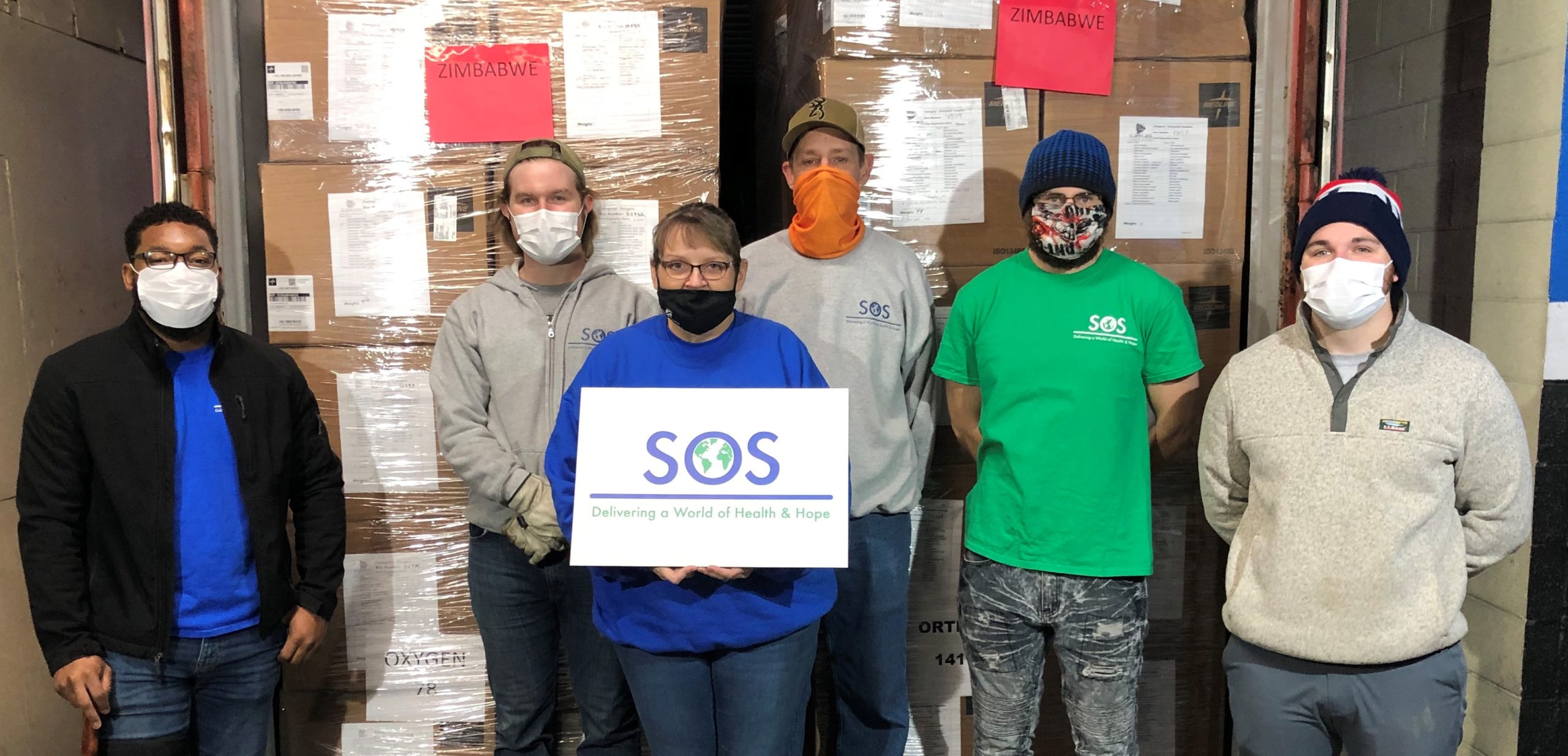
A Container of Medical Supplies for St. Albert’s

September 21st, 2011
In early July, the 590’ cargo ship Maersky Visby left Baltimore’s Seagirt Terminal carrying a 40-foot container destined for St. Albert’s Mission Hospital in Zimbabwe. The container was shipped by Brother’s Brother Foundation (BBF), with a support from Better Healthcare for Africa (BHA). The container was filled with donated medical supplies requested by St. Albert’s and provided by Hospital Sister’s Mission Outreach (HSMO), BBF and BHA. Here is a map tracking the course of that container, and a description of the key events in its preparation and travels. 

By Darrell E. Ward


View Tracking the St. Albert’s Container in a larger map

2010

BBF begins planning to ship donated medical supplies to three African countries, Zimbabwe, Malawi and Liberia. Luke Hingson, president of BBF, contacted BHA for help in reaching Dr Elizabeth Tarira, director of the Zimbabwe Catholic Health Commission, which oversees Zimbabwe’s network of Catholic mission hospitals. BBF then works with Dr. Tarira, who also directs St. Albert’s Mission Hospital, to identify the Catholic mission hospitals in Zimbabwe most in need of aid.  

December: BBF Medical Director Dr. Chip Lambert makes a reconnaissance trip to visit the hospitals identified for possible shipments. The list for Zimbabwe list includes Catholic and Methodist hospitals, and a Salvation Army hospital.   Read more »