Leading Health Problems Around St. Albert’s

July 1st, 2011
 
A village on the escarpment near St. Albert’s Mission Hospital

Abby Norris Turner, PhD, is a public health researcher in Ohio State University’s Department of Internal Medicine, Division of Infectious Diseases, who has conducted research in Zimbabwe since 1999. Her work focuses on women’s reproductive and sexual health. Her current project involves a counseling intervention related to practices that women undertake such as drying the vagina to increase male pleasure during intercourse. Such “dry sex” may increase the risk of acquisition of HIV as well as another reproductive tract infection called bacterial vaginosis.

Before Abby left for a trip to Zimbabwe in April, Better Healthcare for Africa helped her arrange a meeting in Harare with Dr. Elizabeth Tarira, director of St. Albert’s Mission Hospital, to explore the possibility of doing some work at St. Albert’s. Abby asked Elizabeth to name the most pressing public health problems in the area around St. Albert’s. Here are the leading problems Elizabeth noted: Read more »

Cancer in Zimbabwe: Elizabeth’s breast cancer returns; she asks for your spiritual support

June 23rd, 2011

Dr. Elizabeth Tarira (right) with her mother and sister Juliet. Juliet runs the Shelter Trust, an NGO in Harare that works with St. Albert's Hospital to care for abandoned pregnant women.

Rome
21st June 2011

Dearest Friends,

God has always good plans for each and every one of us. 

Greetings from Rome! Some of you have been following my breast-cancer illness for many years now, so I have to give you some updates. It seems I have developed resistance to the drugs I have been taking.

At the end of 2009, I had another small lump operated just below the previous scar and had a small mark on the sternum bone. The cancer markers that had started going up, after the operation and the change of therapy, started going down. This year at my check up, the markers had risen again and seemed on a loose end, and one of the ribs had some osteoblast sign (the bone looked eaten up). This did puzzle the doctors. Now I have been put on a new hormone treatment which is an injection (chemotherapy) every 28 days. I do not know yet if I shall respond well to this treatment. I shall have the blood test repeated on the 4th of July. The drug name is Faslodex (generic name, fulvestrant) produced by Astra Zeneca. Read more »

The Story of the Pediatric Wheelchairs

June 11th, 2011

Occasionally we are in the right place at the right time with the right people. This time, that place for me was on the phone with Brother’s Brother Foundation (BBF). The opportunity resulted in a donation of five specialized pediatric wheelchairs for St. Albert’s Mission Hospital. For me, it also led to a renewed appreciation for the work that so many individuals and organizations are doing to improve healthcare in underserved areas of the world. Here is how events unfolded. Read more »

Report finds critical shortage of midwives in Zimbabwe

May 19th, 2011

This model of a pelvis with fetal heads was one of two hand-carried to St Albert's in March.

The number of midwives in Zimbabwe’s public sector is down by 80 percent, making it difficult for pregnant woman to find skilled assistance for the delivery of their babies, according to a 12 May 2011 news story by IRIN, the United Nations humanitarian-news organization.

The article notes that midwives can avert 80-90 percent of maternal deaths and reduce the deaths of newborns from preventable complications.

This information comes from a recent report on Zimbabwe’s progress toward achieving the Millennium Development Goals, compiled by the UN Population Fund (UNFPA), the UN Children’s Fund (UNICEF) and the World Health Organization.  To help ease the shortage, St. Albert’s Mission Hospital will begin a midwife training program in September 2011. Better Healthcare for Africa (BHA) is supporting the St. Albert’s program by purchasing teaching models and other supplies that will help provide effective and realistic training for the midwifery students. Funds provided by BHA contributors made these purchases possible. Read more »

Cancer in Zimbabwe: Can we ease the suffering?

May 8th, 2011

Elderly woman with cervical cancer and vaginal fistula. She was cared for by her daughter.

The 9 March 2011 post about cancer care in Zimbabwe has led to a series of interesting comments, many of them relate to cervical and breast cancer. The suffering caused by cervical cancer in Zimbabwe was etched into my mind in December 2000, during my second visit to St. Albert’s. I was with the hospital’s home-based care team as they did home visits. The eight or ten stops that day included the elderly woman in this photo who had cervical cancer. In her case, progression of the cancer had caused a vaginal fistula. The woman hardly stirred while we were there.   The woman’s husband had abandoned her in this hut on their homestead. She was destined to spend her last days lying on empty feed sacks on the hard floor. Fortunately, she was cared for by the daughter in the photo. 

I thought about the work that caring for the elderly woman had to require. In the U.S., caring for an incontinent elderly adult is difficult even with washing machines, dryers, unlimited clean water, and stocks of sheets and clothing. The daughter had none of those conveniences…no appliances, no electricity, and she had to fetch water, perhaps from some distance away. The St. Albert’s team checked the elderly woman’s condition, answered the daughter’s questions and offered advice on how to keep the woman as comfortable as possible. The team provided paracetamol (a mild pain killer) and some pads, bandages and other supplies. Then we returned to our pick-up truck and left for the next stop. I took with me this woman’s image.  Read more »

To the Women of Zimbabwe with Breast Cancer: A Letter of Caring and Support

April 19th, 2011

For more than thirty years I have been an oncology social worker, and, since 1993, I have also been a woman living with breast cancer.  I am the Chief of Oncology Social Work here at Boston’s Beth Israel Deaconess Medical Center, a teaching hospital of Harvard Medical School. In addition to my clinical responsibilities, I am on the faculty of the Simmons College School of Social Work, give many lectures and talks, and have written a number of professional articles and two books about coping with breast cancer. For a year, ending in November 2008, I wrote a blog for RevolutionHealth.com and loved the experience of connecting with women all over the world. When that opportunity ended, I was delighted that Beth Israel Deaconess Medical Center decided to support a similar program. I now write a daily blog about various medical and psychosocial concerns, Living with Breast Cancer.

I had been working with women with breast cancer for 14 years at the time of my first diagnosis. I thought that I knew a lot about what it was like to live with breast cancer, but, in the first minute after hearing the words from my doctor, I realized that I knew nothing. Spending my days with women coping with cancer should have prepared me for my own diagnosis. But like almost everyone else, I was stunned by the news and most helped by other women who had walked this path. Their experiences informed and guided me, and I could not have managed as well without the breast cancer community that surrounds me. Read more »

World Malaria Day is Monday, April 25th

April 19th, 2011

Malaria infects about 500 million people yearly, and 1 million are killed by it. SubSaharan Africa is hardest hit. The World Health Assembly initated World Malaria Day during its 60th session in May 2007 to remind us of the efforts being made to deal with the problem. Take a few minutes to learn more about the disease, the people it affects, and what’s being done to control at this World Health Organization site.

Breast Cancer in Zimbabwe

April 18th, 2011

A post of mine about cancer care available in Zimbabwe following my March 2011 trip led to interesting comments from readers that focused mainly on the problem of cervical cancer. Is breast cancer also a problem in Zimbabwe? For example: 

  • What is its prevalence and treatment?
  • What are the perceptions and treatment of the disease and how do they differ in urban vs rural areas?
  • Is stigma a problem?
  • Are there support groups to help women (and men) cope with breast cancer?
  • Are there any studies under way or planned that relate to breast cancer?

Your comments are welcome and might help others.

Thanks, and I hope all is well…Darrell

Closing the Case of the Customized Bags

March 26th, 2011

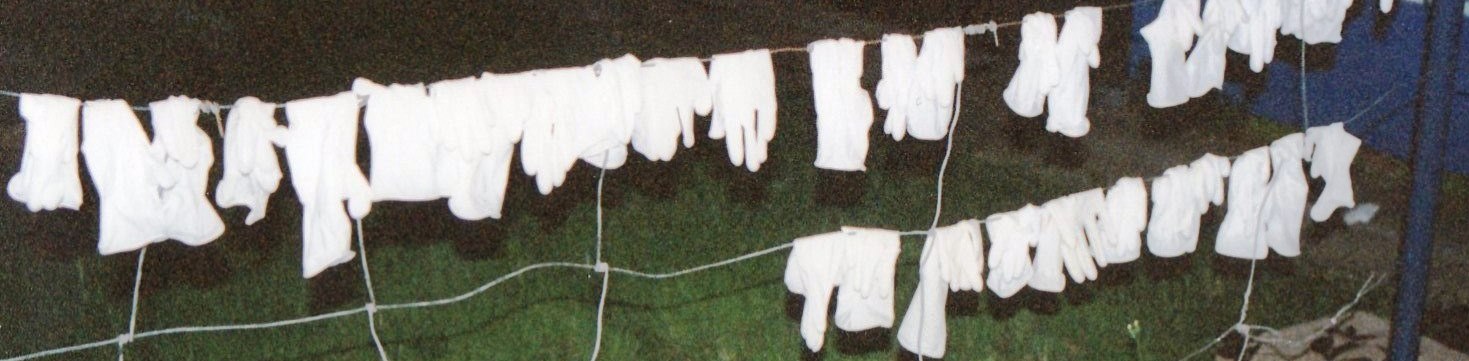
Readers may recall that when Luke Hingson, president of Brother’s Brother Foundation, Mary Mahlie, CEO of Hospital Sisters Mission Outreach, and I arrived in Harare on Feb. 27th, three bags of donated medical supplies we’d brought with us were detained by customs at Harare airport. Two of these were suitcases carried by Luke and Mary containing supplies provided by Brother’s Brother and Hospital Sisters. The third was one of two duffels I’d carried for Better Healthcare for Africa. Together the duffels contained three autoclavable containers of surgical instruments provided by Brother’s Brother, 550 sutures donated by Global Links, and supplies obtained by BHA that included suture; bandages; gastric tubes; surgical gloves, masks, gowns and drapes; and two teaching models for the midwife program. We left with our suitcases of personal items, which also contained a small amount of supplies. Mine also contained children’s books and other nonmedical items for the hospital.

The detention of the bags was a blow to all of us because the supplies they carried were to be distributed to five mission hospitals we were to visit over the next three days. In addition, one of my duffels hadn’t made it to Harare and remained in Addis Ababa. Fortunately, we were able to pick up the duffle left in Addis the next day and take it with us. So we had these items, along with some that Luke and Mary had packed in their suitcases of personal belongings. Thus, we had some items to pass out at the hospitals. In the end, good also came from the detention of our bags by customs. Read more »

March 9 — Cancer Care in Zimbabwe

March 10th, 2011

I’ve paid extra attention to the subject of cancer care during this visit to Zimbabwe. Economic conditions have improved in the country since my 2009 visit. The economy has stabilized somewhat, the shops have food for those with the U.S. dollars to purchase it, and there are many cars, many new cars, on the roads. Yet, power cuts are common; fuel can be difficult to find; Harare’s water remains unsafe to drink, and some suburbs are not being supplied; and unemployment runs above 90 percent, leaving many people, particularly in rural areas, without cash for food, school fees, and other necessities.

So, how does cancer care fit into this situation? Read more »